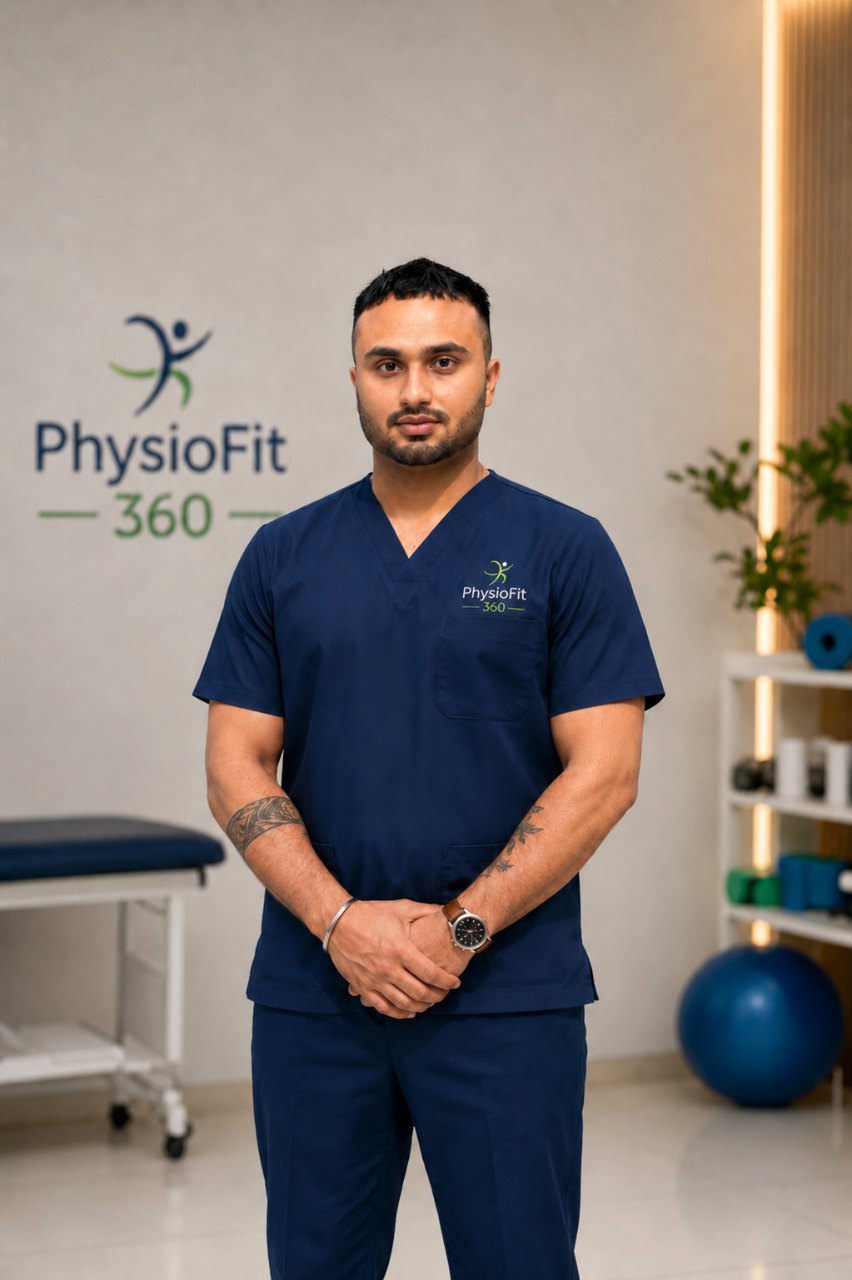
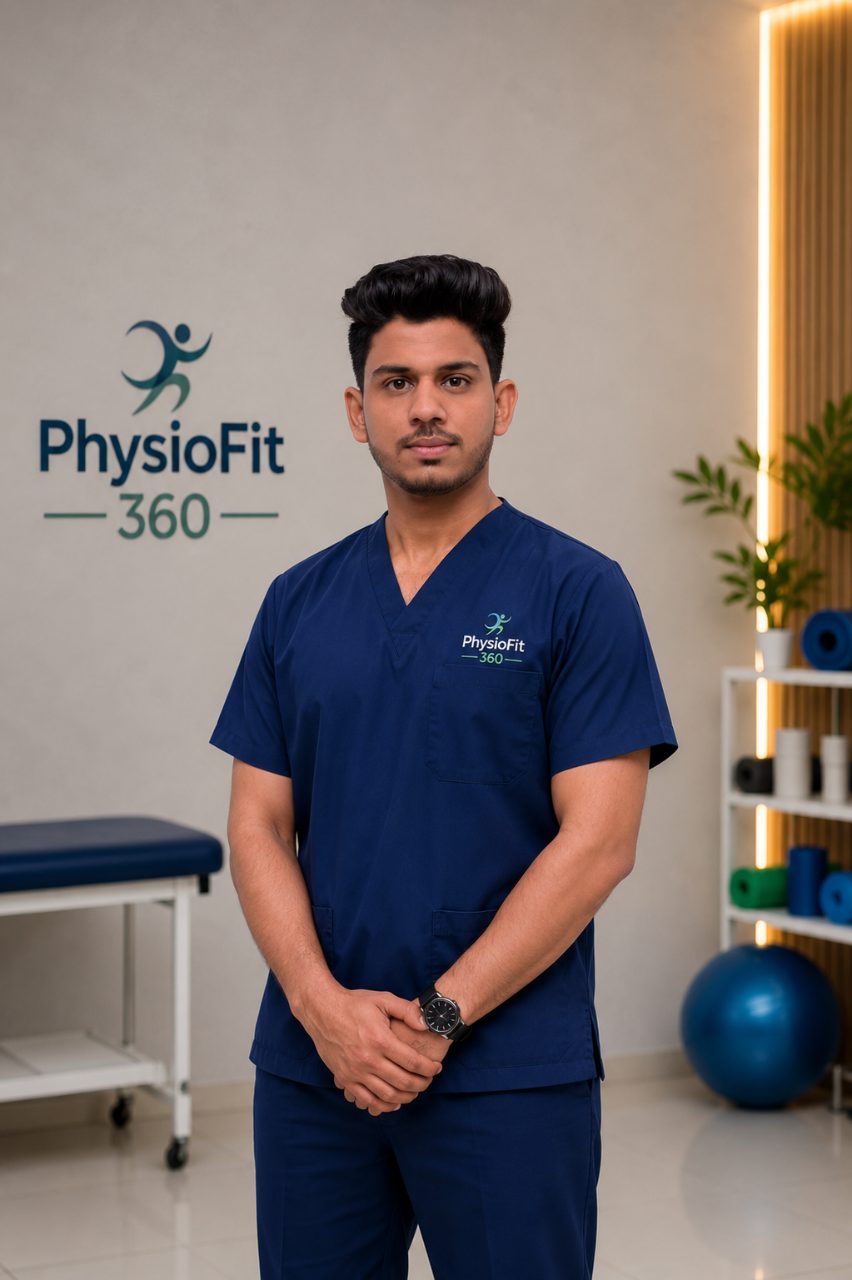
Dr. Ankit Choudhary
MPT, BPT
Certified Manual Therapist & Sports Physio Specialist
- Manual Therapy
- Sports Physiotherapy
- Sports Rehabilitation
- Musculoskeletal Physiotherapy
- Movement Recovery
Professional Overview
Dr. Ankit Choudhary is a Certified Manual Therapist and Sports Physio Specialist at Physio Fit 360, holding an MPT and a BPT. His stated areas of practice bring together two closely connected strands of physiotherapy: hands-on manual therapy and sports rehabilitation, both applied to musculoskeletal problems and movement recovery.
Manual therapy is the branch of physiotherapy that uses skilled, hands-on techniques applied to joints and soft tissues to influence movement restriction, tissue tolerance and the way a region moves under load. Sports physiotherapy, in turn, is concerned with how the body copes with physical demand — training, competition, repetitive activity and the return to those activities after an injury. Together they cover assessment of how a person actually moves, structured rehabilitation to rebuild capacity, and progression back towards the activity level that matters to them.
Within the Physio Fit 360 team, Dr. Ankit's role reflects this combined focus: musculoskeletal assessment, hands-on treatment where it is clinically appropriate, and exercise-based rehabilitation that carries the gains from the treatment table into everyday movement, work and sport.
Specialization & Clinical Focus
Manual therapy is a clinical skill set rather than a single technique. It generally involves a detailed physical assessment of joint mobility, soft-tissue quality and movement patterns, followed by graded hands-on techniques such as joint mobilisation, soft-tissue work and guided movement. The aim is not simply to treat a painful spot but to understand why a region has become stiff, guarded or overloaded, and to change the conditions that keep it that way.
Sports physiotherapy shares that assessment-led logic but adds the demands of activity. A person who runs, lifts, plays a field sport or works physically places specific, repeated loads on particular tissues. Rehabilitation in this area typically works through stages: settling irritability, restoring range and control, rebuilding strength and tissue tolerance, then reintroducing speed, direction change and sport-specific tasks. Each stage has criteria rather than fixed dates, so progression follows how the body responds.
Musculoskeletal physiotherapy links the two. It covers the spine and limbs, joints, muscles and tendons, and the functional problems that come with them — restricted movement, difficulty loading a limb, pain that limits activity, or a region that never quite returns to its previous capacity. Movement recovery is the practical outcome of that work: the ability to bend, reach, squat, walk, run or lift with reasonable comfort and control.
In practice this area of physiotherapy is a combination of hands-on treatment and active rehabilitation. Manual techniques can create a window of easier, less guarded movement; exercise is what makes that change durable. The clinical judgement lies in choosing when each is appropriate and how quickly to progress.
Areas of Clinical Focus
Manual Therapy
Hands-on joint and soft-tissue techniques used to address movement restriction and improve how a region tolerates movement. Applied as part of a wider rehabilitation plan rather than in isolation.
Sports Rehabilitation
Staged rehabilitation for sports-related physical problems, working from early movement through to strength, control and activity-specific demands. Progression is guided by response rather than a fixed timeline.
Musculoskeletal Physiotherapy
Assessment and rehabilitation of spine and limb problems affecting joints, muscles and tendons. Focuses on restoring usable range, strength and comfortable movement.
Movement Assessment
Observation of how a person moves through everyday and sport-specific tasks. Helps identify limitations in mobility, control or loading that rehabilitation can address.
Return to Activity
Structured reintroduction of the tasks that matter to the individual, whether that is training, work or daily physical activity. Criteria-based rather than time-based.
Strength & Tissue Tolerance
Progressive loading to rebuild the capacity of muscles and tendons after a period of reduced activity. Supports sustained recovery rather than short-term relief.
Rehabilitation Needs This Specialty Addresses
- Musculoskeletal Rehabilitation
- Movement Restriction & Mobility
- Sports Injury Recovery
- Strength & Loading Capacity
- Return to Physical Activity
- Movement Quality & Control
- Functional Rehabilitation
Rehabilitation Goals
Rehabilitation in manual therapy and sports physiotherapy is generally organised around functional goals rather than a single endpoint. Early goals often centre on restoring accessible, comfortable movement in a restricted region and helping a person move with less guarding. As tolerance improves, the emphasis usually shifts to rebuilding strength and the capacity of muscles and tendons to accept load, since a region that moves well but cannot yet tolerate demand tends to remain vulnerable.
From there, goals typically include improving movement quality — the coordination and control with which a task is performed — and progressively reintroducing the specific demands of a person's activity, whether that is running, lifting, twisting or standing for long periods. Confidence with movement is treated as a genuine goal in itself, because hesitancy often persists after physical capacity has returned.
Longer-term goals commonly involve maintaining the gains achieved: continuing a manageable strength or mobility routine, understanding which loads are reasonable, and knowing how to respond if symptoms fluctuate. Outcomes vary between individuals and depend on the underlying problem, consistency with rehabilitation and overall health.
Who May Benefit From This Area of Physiotherapy?
This combined area of physiotherapy is generally relevant to people whose difficulty involves the muscles, joints or tendons and who want to move and load their body more comfortably.
- Athletes and recreational sports participants
- Physically active individuals working through a sports-related physical problem
- People experiencing musculoskeletal movement restriction
- Individuals returning to activity after a period of reduced movement
- People whose work or daily routine involves repeated physical demand
- Individuals working towards improved mobility, strength and movement confidence
Approach to Physiotherapy
The general principles behind manual therapy and sports rehabilitation start with assessment. Understanding what a person needs to do — their work, sport, and daily physical demands — shapes what rehabilitation should aim for, so goals are set with the individual rather than for them.
Rehabilitation of this kind is progressive by nature. Loads, ranges and complexity are increased gradually, with each stage building on the tolerance established by the previous one. Hands-on treatment, where used, is generally paired with active exercise so that improvements in movement are reinforced by capacity the person builds themselves.
Patient participation matters a great deal here. Much of the work happens between appointments, which makes education an active part of care: understanding why an exercise is prescribed, what a reasonable response feels like, and how to adjust when a day is harder than expected. Consistency over weeks generally produces more reliable change than intensity in isolated sessions.
Finally, progression is reviewed rather than assumed. Plans are adjusted based on how a person actually responds, and expectations are kept realistic — physiotherapy supports recovery, it does not guarantee a specific outcome.
Why This Specialty Matters
Musculoskeletal problems are among the most common reasons people reduce their activity, and reduced activity has consequences of its own — strength declines, joints feel stiffer, and confidence with movement erodes. An area of physiotherapy that combines hands-on assessment with structured, progressive loading matters because it addresses both parts of that cycle.
Manual therapy can make movement more accessible in the short term; sports and musculoskeletal rehabilitation build the capacity that keeps it accessible. For someone who wants to return to running, to a physical job, or simply to lifting their child without hesitation, that combination is the difference between temporary relief and a durable return to activity.
It also matters preventively. Understanding how one's body responds to load, and having a realistic routine to maintain strength and mobility, gives people a practical way to keep doing the activities that support their long-term health.
Part of the Physio Fit 360 Team
Working inside a multidisciplinary physiotherapy clinic means a patient is never limited to a single perspective. At Physio Fit 360, physiotherapists with different areas of specialisation — manual therapy, sports rehabilitation, orthopaedic care, neurological rehabilitation and general physiotherapy — practise under one roof in Sector 22B, Chandigarh. That shared environment makes it easier to match a person with the clinician whose focus best fits their rehabilitation needs, and to discuss a case collaboratively when a recovery journey touches more than one area. It also supports continuity: assessment, progression and review happen in the same place, with the same standards of care and communication. For patients, the practical benefit is straightforward — specialised attention within a team that understands rehabilitation as a shared, structured process rather than a series of isolated appointments.
Meet More of Our Team
Ready to Take the Next Step?
Connect with the Physio Fit 360 team to discuss your physiotherapy and rehabilitation needs.